Home / Work / OCBC AI prototypes
Built solo
Three AI prototypes for OCBC
I built these in a week on OCBC's public product data, pulled through its API, to reimagine how AI could work in a regulated bank: grounded, explainable, and never acting on its own.
- Status Prototypes
- Built October 2026, solo
- Stack Python, Streamlit, scikit-learn, Claude
Unofficial prototypes, not affiliated with or endorsed by OCBC. Product facts come from OCBC's public product data, accessed through its API. All customer data is synthetic.
1. Product Q&A for staff
How an answer is made
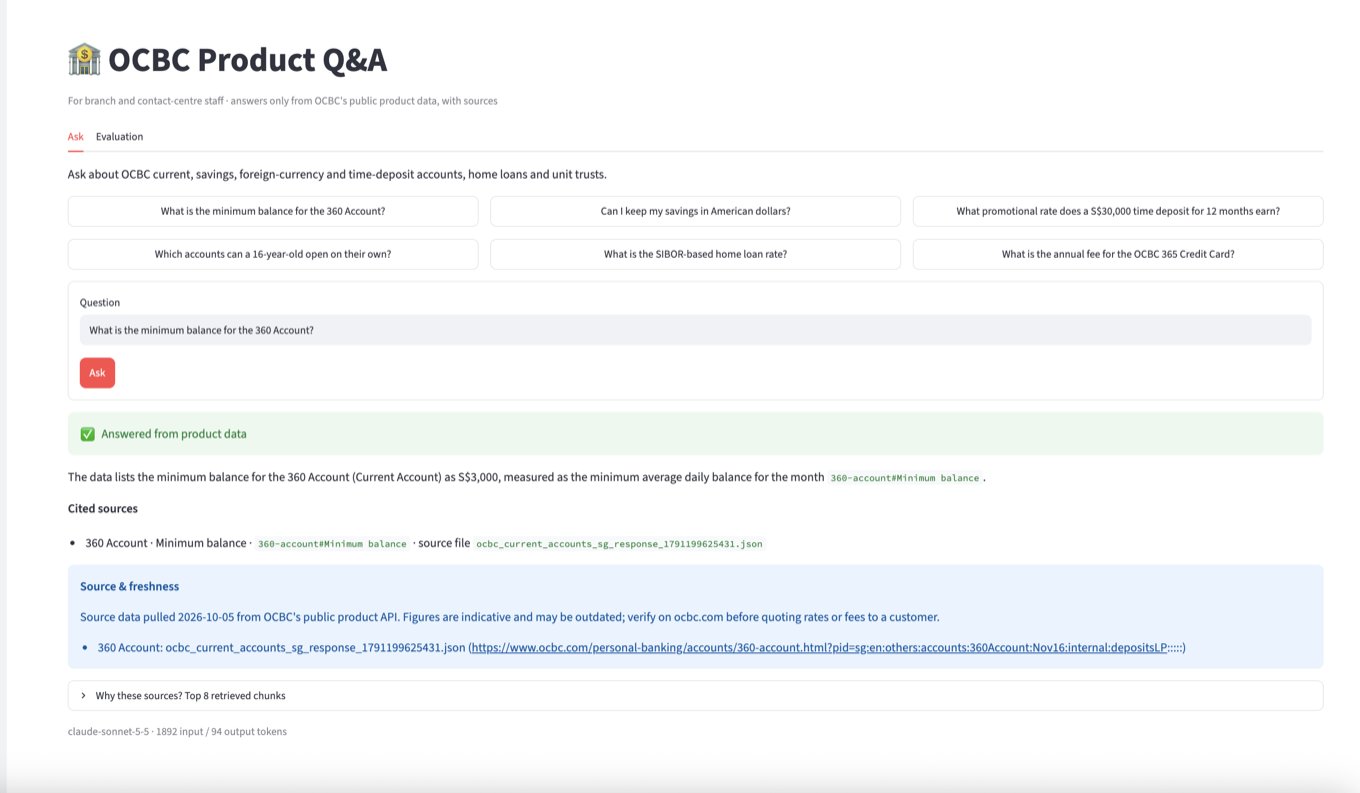
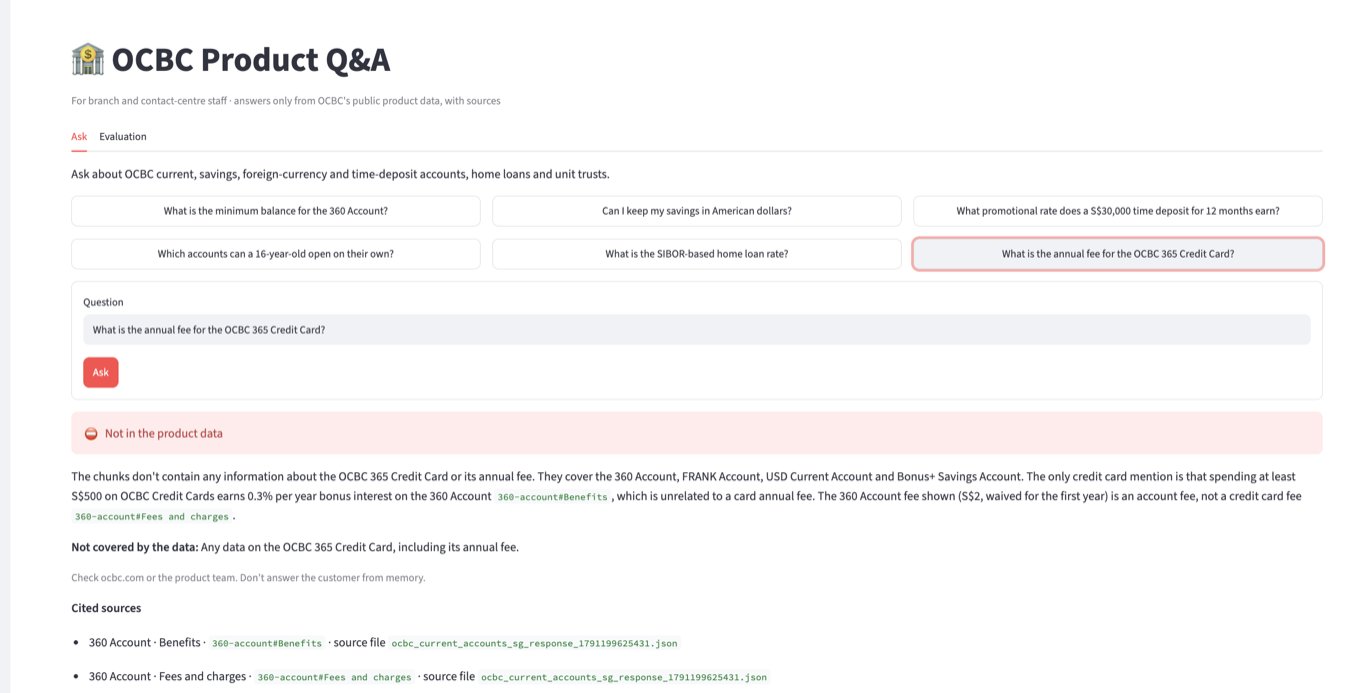
A staff questionRetrieve product sectionsAnswer with the source citedOr refuse, if the data doesn't cover it
GroundedAnswers only from retrieved sections of product documents.
Honest about gapsRefuses when the data doesn't cover the question, and warns when it is stale.
MeasuredAn evaluation tab compares keyword search with a hybrid approach and lists the wrong answers.
2. Campaign targeting by uplift
From customers to compliant copy
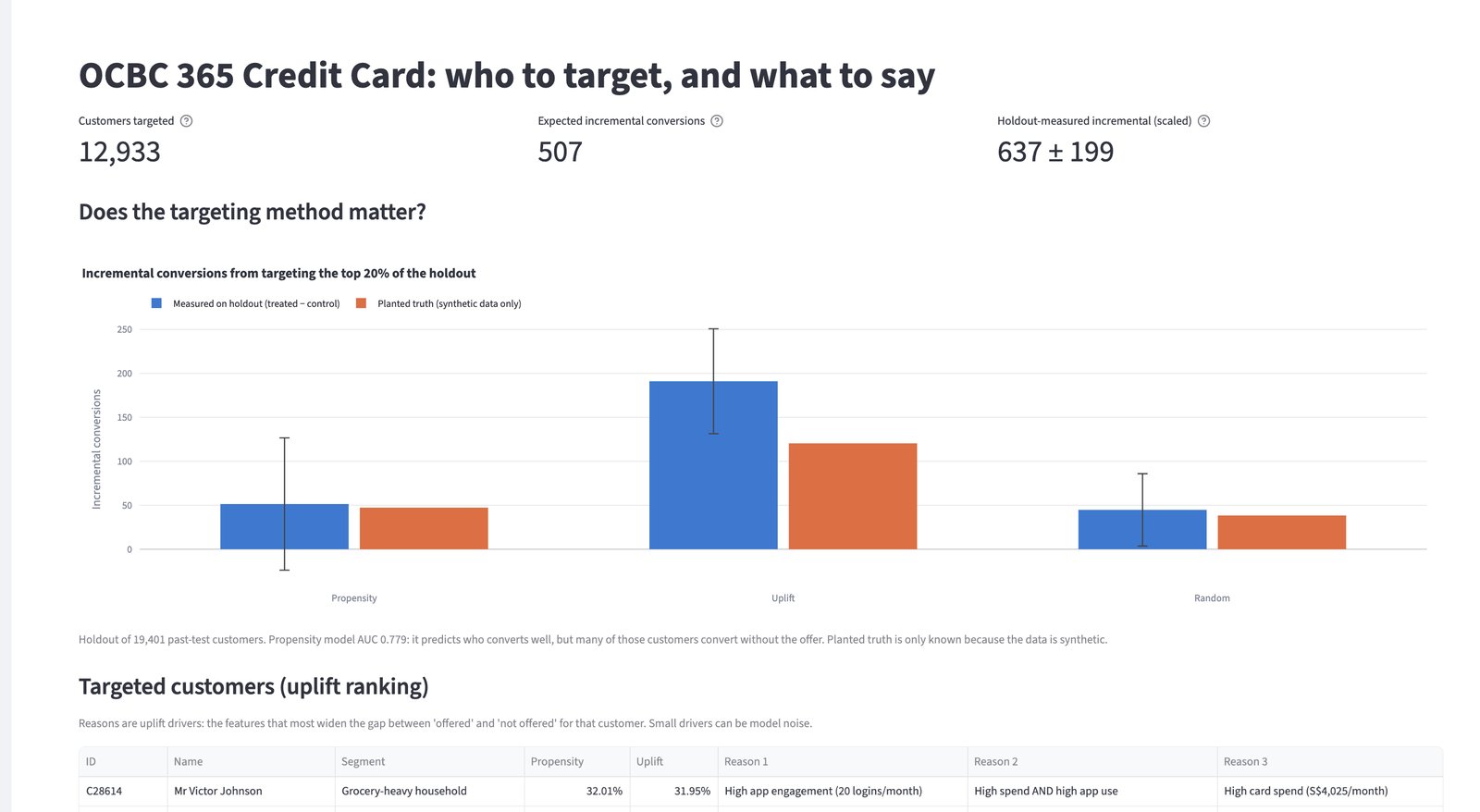
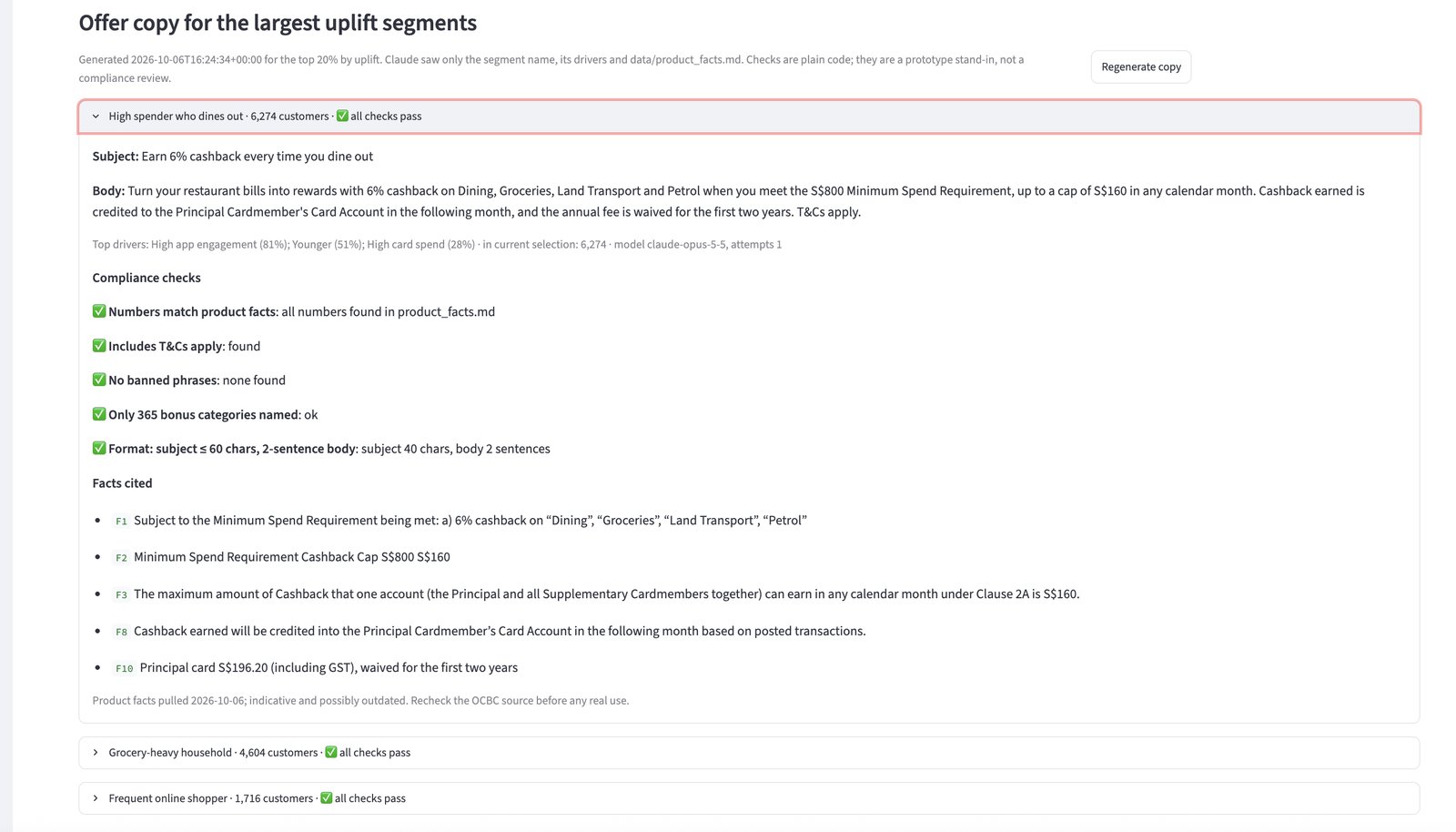
CustomersUplift modelRanked list with reasonsDraft offer copyCompliance checks
Uplift, not propensityRanks customers by the extra chance of converting that the offer itself causes.
Reasons shownWhy each customer was chosen, in plain words.
Checked copyClaude drafts from cited product facts, and plain-code compliance checks run on every draft.
3. A copilot for relationship managers
The manager always decides
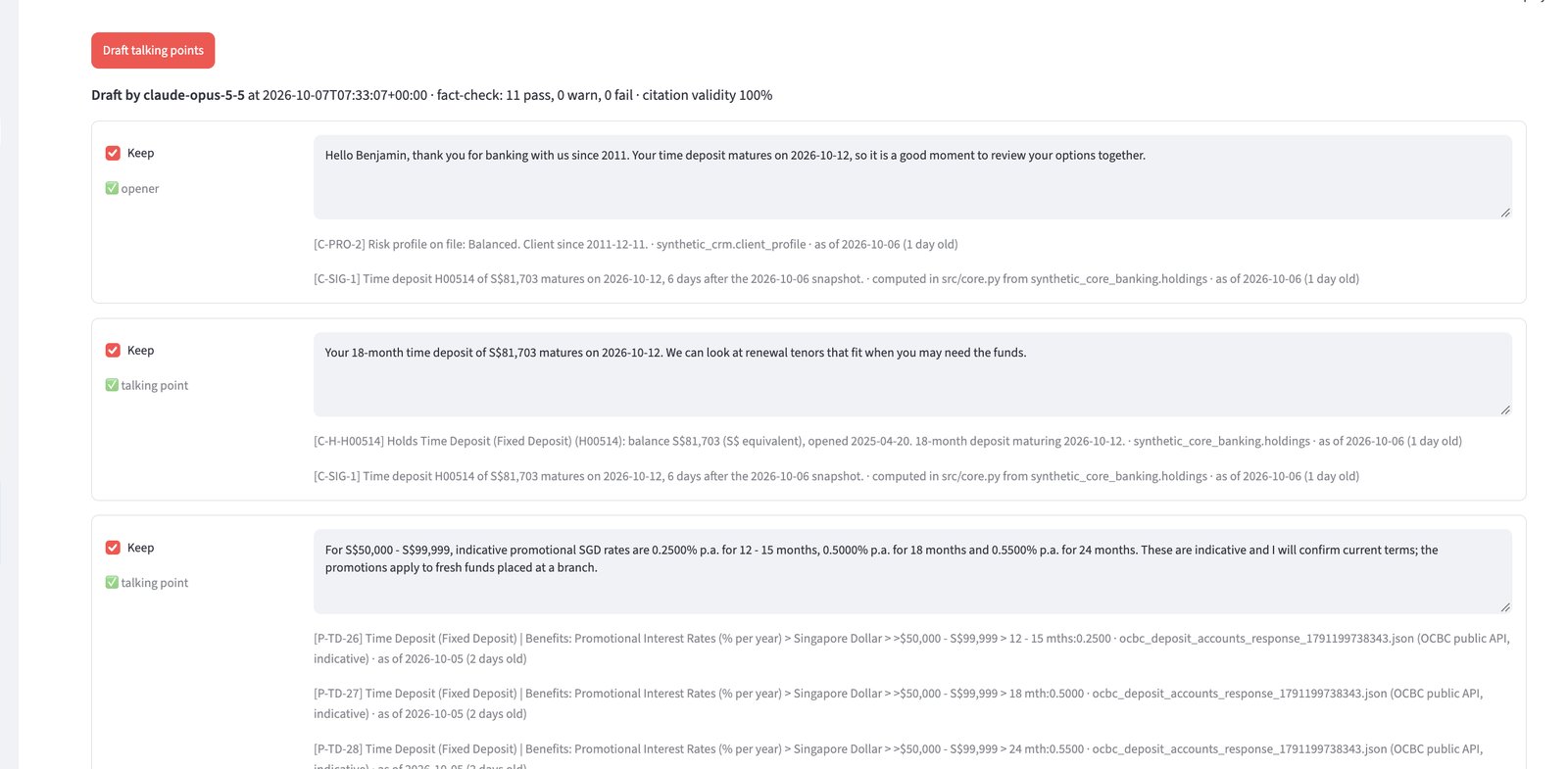
A manager's clientsRank by who needs attentionSummarise in codeDraft talking pointsFact-check every pointManager reviews and decides
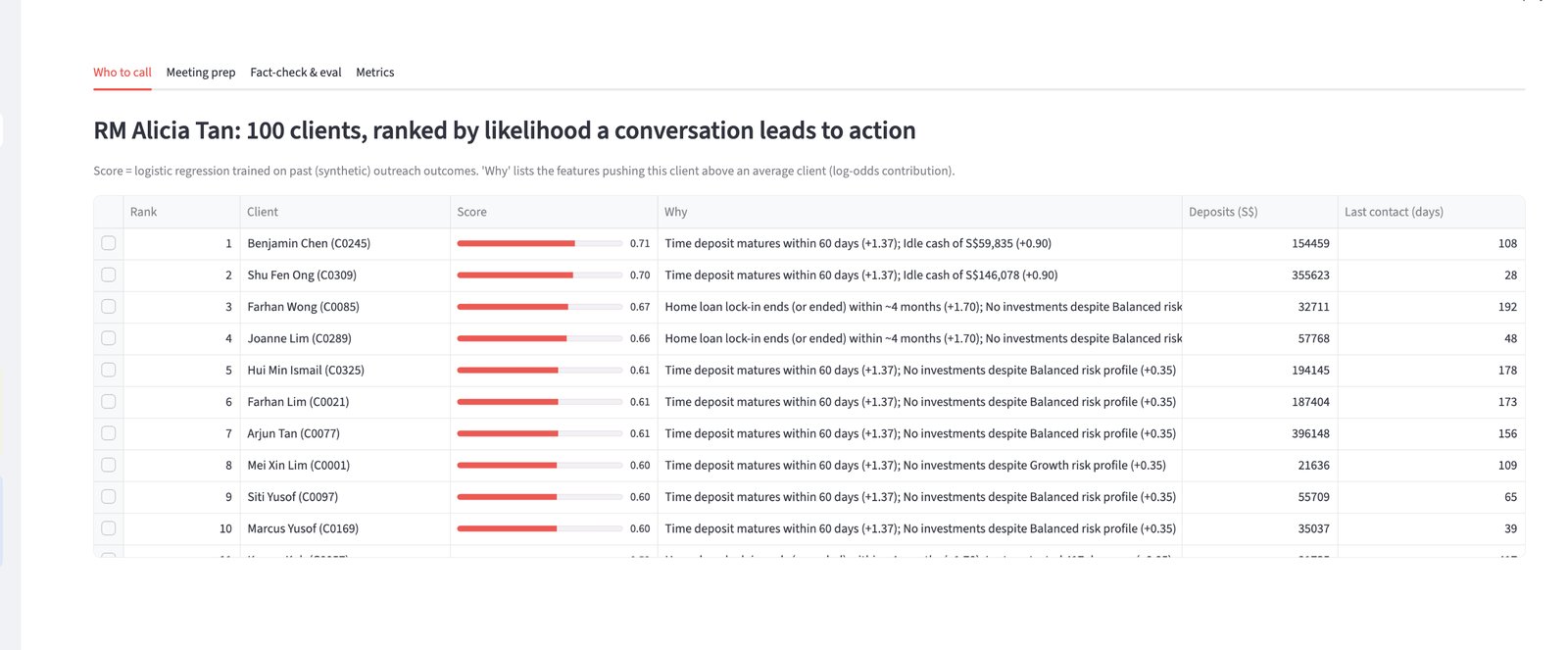
Who to callRanks clients by who needs attention, with the reasons.
Cited pointsEvery talking point cites a source fact with its date.
Never acts aloneIt never contacts a client. The manager reviews, edits and decides.
Rules I held across all three
Show whyEvery score or ranking explains itself.
Simple firstExplainable methods before complex models.
Fail safelyEvery AI call has a timeout and a non-AI fallback.
Flag assumptionsAssumptions about banking data and regulation are marked where they are made.
A walkthrough is available on request. The thinking behind how each one splits the work between machine learning, a language model and plain code is in ML decides, the LLM writes, code checks.