App switcher
I shipped a product with no team, by making it serve other teams' goals
Early at Atlassian I was given two things: a shared role on a high-priority navigation overhaul, alongside a Principal PM, and sole ownership of the app switcher. The switcher was an orphan. It had no team, and every product had added its own features to it over the years, with nobody setting direction.
I saw it differently. It was the one place across every Atlassian product where people land when they want to move between them. Get it right, and it wasn't a tidy-up. It was the most powerful cross-sell surface in the company. But every engineer was busy with the navigation overhaul.
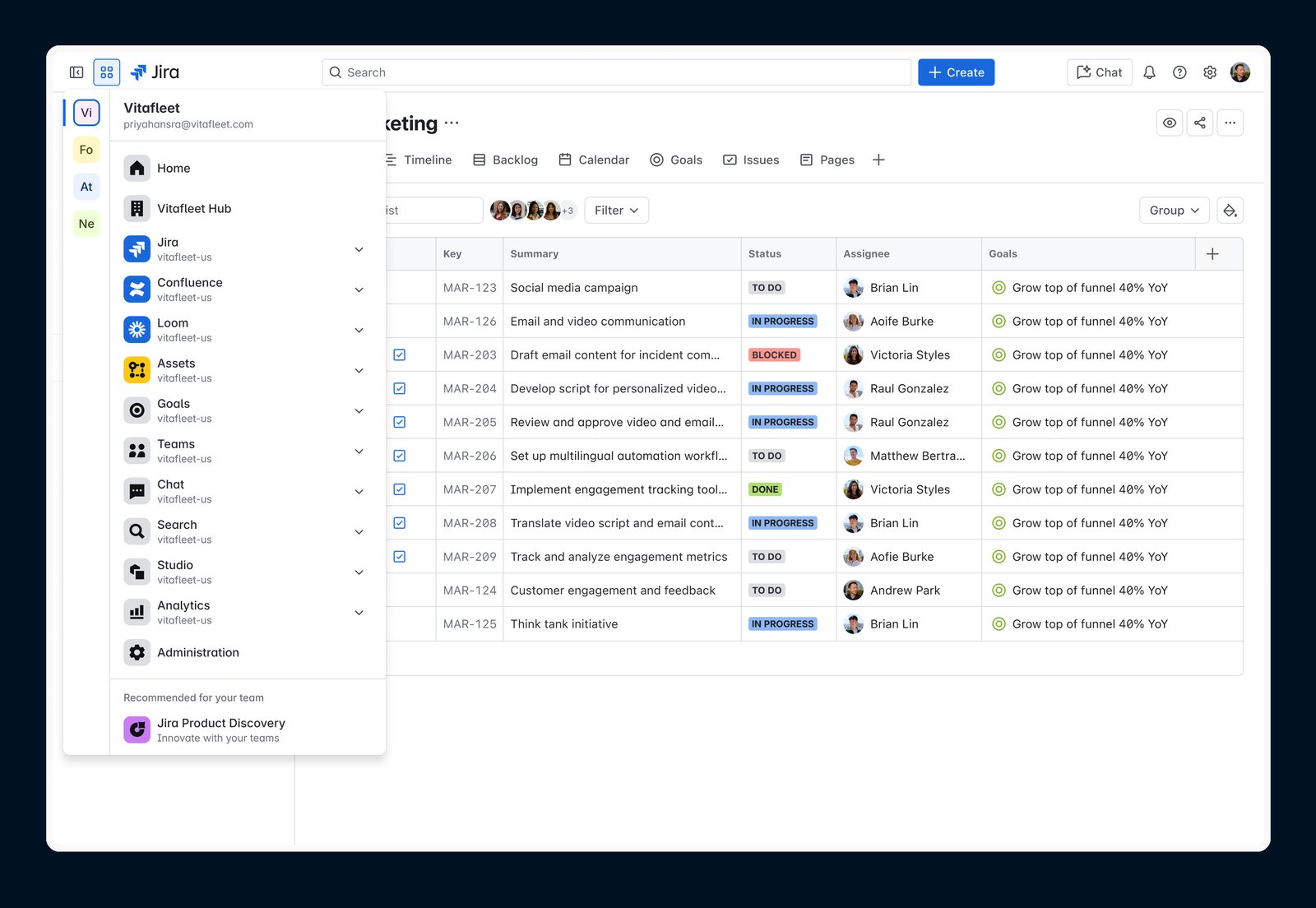
They didn't need to believe in my vision. They needed to see it served their own goals. With no authority, that is the only currency you have.
Sprint reports
Shipping one report instead of two delivered more
In 2019 Jira was bringing reports to its newer team-managed projects, built for teams who found classic Jira hard to use and were trying simpler tools. Two well-known reports were missing: the burndown chart and the sprint report. The safe option, which my manager favoured at first, was to rebuild both, because customers were used to having two.
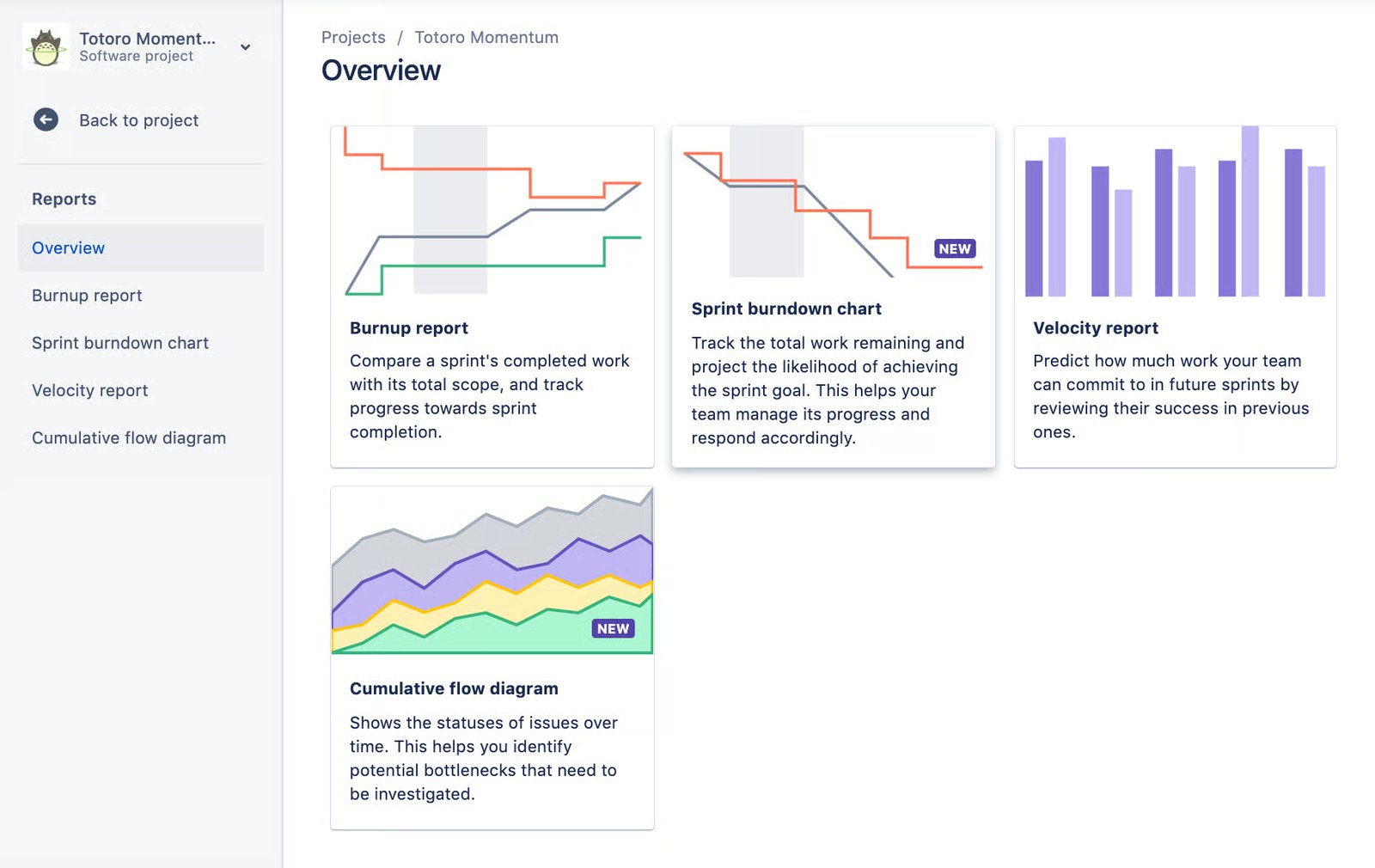
Why one report, not two
We spoke with more than ten customers and watched how they used both. It was often the same people, at different moments. During the sprint, they used the burndown chart in stand-ups to spot scope changes and remove blockers. At the end, they used the sprint report's table of what was and wasn't done for retrospectives and for reporting to stakeholders.
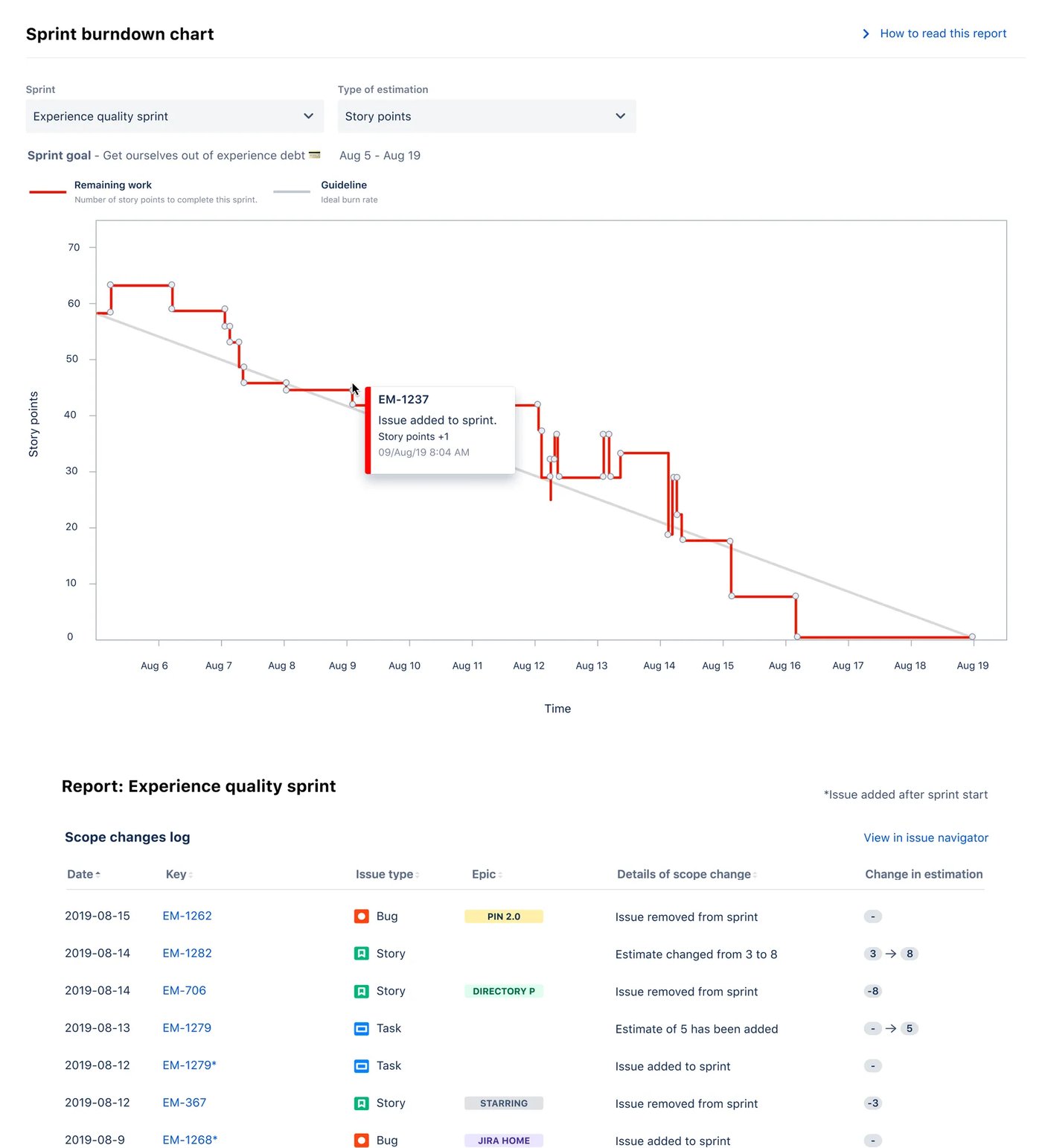
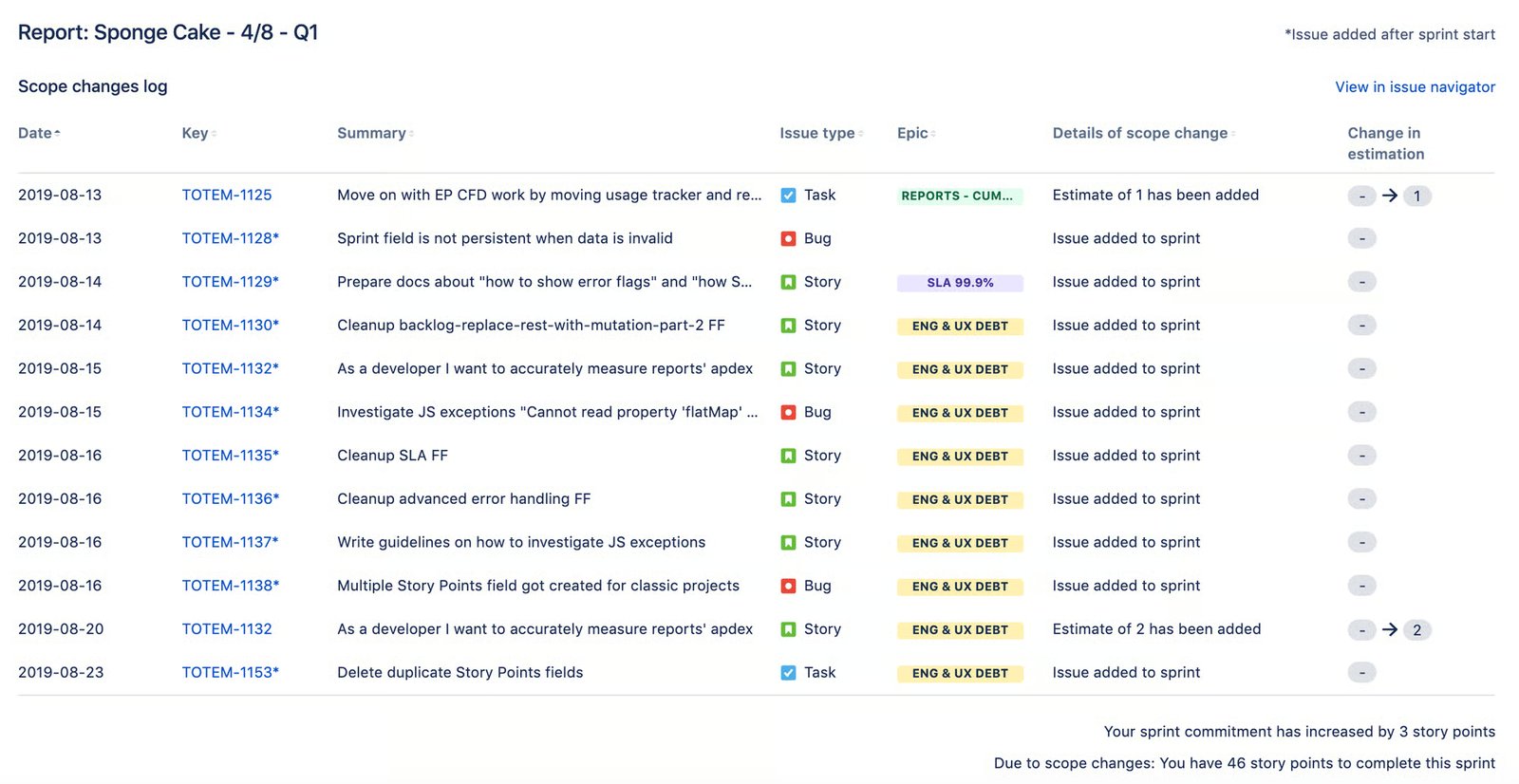
Both reports answered the same question: what might stop us meeting our sprint commitment, and how do we get better next time? Keeping two meant more to learn for every new user and more for us to maintain. So we took the best of each, the chart from one and the table from the other, and made them a single report.
What we reimagined
What happened
After it shipped, use of the sprint report and the frequency of burndown use both rose, and customers asked for more reports rather than the old one back. Feedback on the launch post called it more helpful than the regular burndown. Other comments asked for the next things: per-person burndowns, non-working days and a control chart.
The engineering manager thanked us for pushing for something the team could be proud of, and our Head of Product later used it as an example of shipping from needs rather than legacy structure.
Read the launch posts on the new sprint burndown and the first Kanban report, or watch my Demo Den on the new reports.
Multiple boards
Pausing a year of work was the right call. Resetting expectations was the hard part.
I led the work to bring multiple and cross-project boards to team-managed projects, something most enterprise customers relied on. It was public and in demand: the request had more than 1,700 votes, and we had invested close to a year.
As the work went deeper, it became clear how much was still needed to reach an enterprise quality bar. At the same time, large customers were feeling performance and scale problems that competed for the same engineers. Both directions were valid. Rather than let the project drift, I set out the remaining effort and the opportunity cost for leadership as an explicit choice: keep investing in a narrow but visible feature, or move the team to foundations that would help far more customers.
The team moved on to unifying the board and backlog and to performance at scale. What I'd do differently is write down, at the start, which assumptions would trigger a stop-or-continue decision, so the conversation is about criteria, not whether the work was worth it.