
Home / Work / Program Moon

Program Moon · Atlassian

Led 13 growth experiments, 8 of them wins, in a program that added about $7.7M ARR

A year of in-product experiments to bring business teams into the Jira their software teams already used. I was the product manager for the Jira Software side.

  • Role Product Manager, Jira Cloud Growth
  • When 2022 to 2024
  • Team Two product teams, with growth, machine learning and data science
A sample go-to-market project in the Jira projects menu
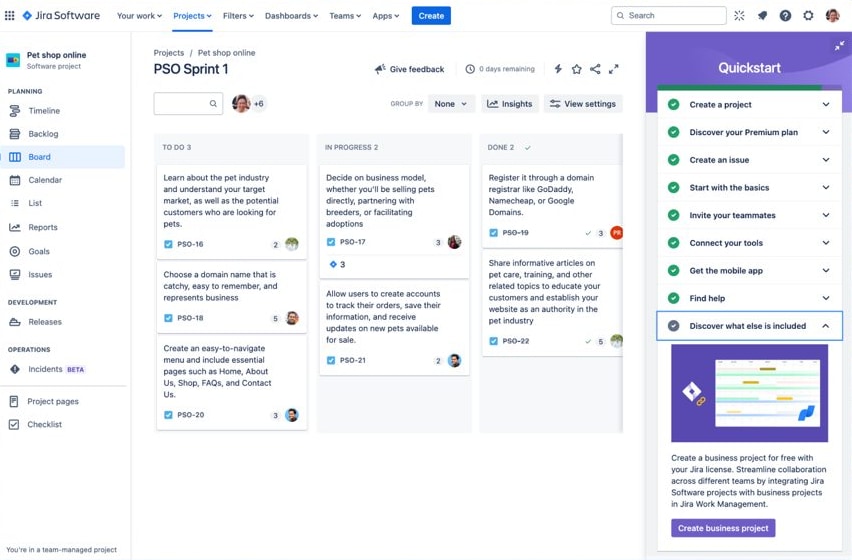
A live sample project replacing an empty state
A prompt to try a sample project while inviting teammates
~$7.7MARR in FY24From business-team expansion, across both teams
8 of 13Experiments I led that wonOut of 20 in the program
+154%Existing sites creating a business projectFrom one sample project, targeted by a model
+50%From replacing an empty stateWith a live sample project

Overview

Business teams didn't know business projects were already in their Jira

Many companies paid for Jira for their software teams. Their marketing, HR and operations teams sat next to them, using other tools, without knowing that business projects were already included. Every one of those teams was revenue left on the table, and a reason for the software team's Jira to be less useful.

Program Moon was a year of in-product experiments to change that: one team at a time, from software teams to the business teams around them. I was the product manager for the Jira Software side. A sister team owned the business-project side: its templates, bundles and upgrade offers.

Program Moon banner

Timing beats placement

Recommendations shown at the moment someone was creating or organising a project had by far the biggest impact.

Sample data beats a blank page

A business project already filled with sample work consistently outperformed an empty state.

Bundles turn usage into revenue

Templates that create connected software and business projects, and targeted upgrade offers, lifted paid usage.

Strategy

Show the right recommendation at the moment someone is ready for it

Business-project usage inside an existing Jira site turned into expansion revenue, so success was measured in paid users, not clicks. My team owned every place inside Jira Software where a software team could discover business projects: the projects menu, onboarding, the invite flow, the templates gallery, search and boards.

The bet
A software team on Jira›sees a recommendation at the right moment›creates a business project›the business team joins›expansion revenue

Guardrails

I decided where experimenting was safe before running a single experiment

The biggest opportunities sat on the most shared surfaces in Jira: the global navigation, project creation and onboarding, used by millions of people every day. The real question wasn't whether to grow. It was how to experiment aggressively without breaking trust for existing customers, or leaving behind complexity the platform would pay for for years.

So we only experimented where a change could be reversed and its reach contained. We never changed the global navigation's defaults, because of how much muscle memory depends on them. We added to it instead. Some ideas with promising early numbers were dropped because they would have permanently added complexity. Saying no to something that works is harder than saying no to something that doesn't.

Reversible

Every change could be rolled back quickly, and anything that failed to reach significance was.

Contained

Targeted audiences first, then staged rollouts, with guardrail metrics watched alongside the goal.

No new debt

Ideas that would permanently raise platform complexity were dropped, however well they tested.

Owned after launch

We built inside other teams' code under an agreement: they reviewed, and we held a three-month warranty on anything that shipped.

Results

Eight wins out of thirteen, and every one statistically significant

Lift in sites creating a business project
Sample project, existing sites chosen by a model+154%
Empty state replaced with a live sample+50%
Sample project, new sites+28%
Prompt on exporting from search+6.9%
Education card in onboarding+6.6%
Prompt when admins invite users+6.4%
Linked issues on software boards+4.5%
Share of sites that created at least one business project, sample projects included.
Lift in new projects still in use in week one
Prompt on exporting from search+205%
Sample project, existing sites chosen by a model+96%
Prompt when admins invite users+49%
Empty state replaced with a live sample+31%
Sample project, new sites+17%
Of sites that created a business project on day one, the share still active in it on days 1 to 6. It checks that new projects stuck, not just that more were created.

All results are from my team's experiments, against a control group.

The program as a whole was forecast to add about $7.7M ARR. Just as important, it produced the evidence our Head of Product needed to keep investing: the work grew from a small team of three or four engineers to two teams of about 15 each, one on Jira Software and one on Jira Work Management.

Experiments

The experiments that won

Shipped in two rollouts

A sample project in the projects menu
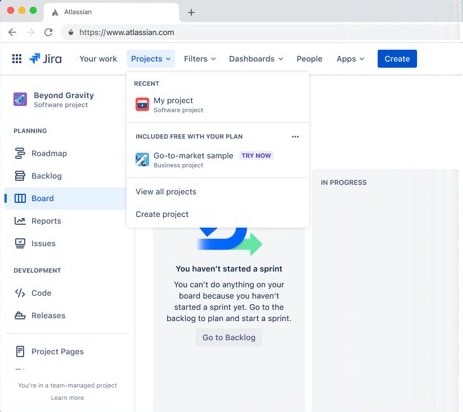
A sample go-to-market project shown in the Jira projects menu with a Try now label

A ready-made business project, filled with sample work, shown in the menu people open to find their recent projects. The projects menu belonged to another team, and they were wary of anything that cluttered it. I came to them with answers before they had to ask: a model to show it only to sites likely to want it, a menu to dismiss it for good, and a clear "Try now" label. A growth team wanted the same spot for another product, so we shared it: the model chose one recommendation per site, and once dismissed it was gone. Both teams' experiments won.

+154%Existing sites creating a business projectChosen by a model, with +96% more still in use in week one
+28%New sites creating oneWith +17% more still in use in week one
+24%Better than random targetingThe model against a random baseline

Hypothesis

We believed that putting a ready-made business project where people look for their projects would result in more sites creating a business project and still using it a week later, because people are most open to a new kind of project at the moment they are choosing which project to open.

New sites were five times more likely to try it. Existing sites were harder to move, but the ones that did moved five times further. That is why the two groups got separate rollouts, with the model only for existing sites.
Shipped

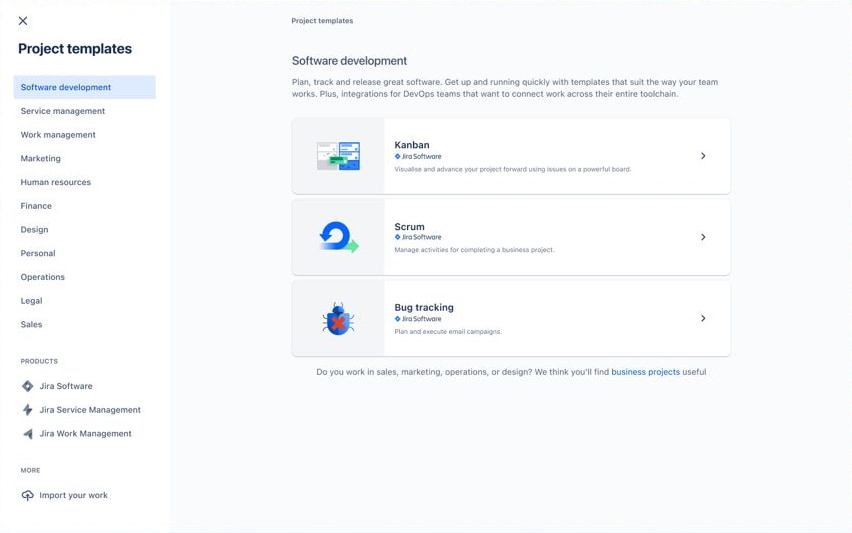
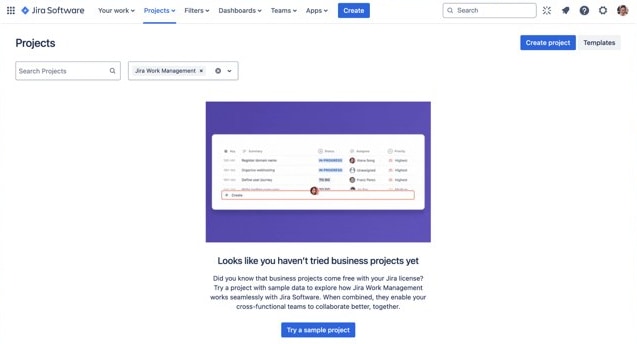
A live sample instead of an empty state

A live sample project with a Try a sample project button, replacing an empty state

Swapped a blank "you haven't tried business projects yet" state for a live sample and a "Try a sample project" button.

+50%Sites creating a business project
+31%Still in use in week one

Hypothesis

We believed that showing a working sample instead of an empty page would result in more business projects created, because people can see what a business project is for before they commit to building one.

This was the cleanest evidence that sample data itself drives adoption, because both groups already had the same entry point.

Shipped

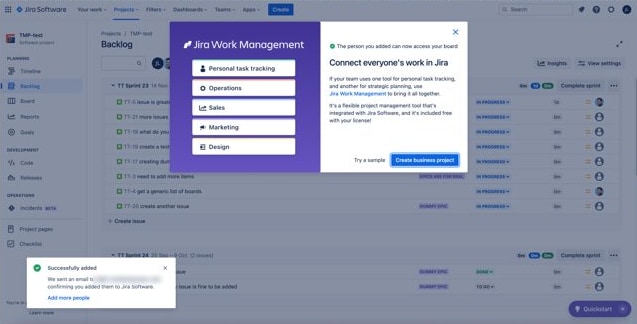
A prompt when admins invite users

A prompt to try a sample business project inside the invite flow

A nudge to try a sample business project at the moment an admin is inviting teammates to Jira.

+6.4%Sites creating a business project
+49%Still in use in week one

Hypothesis

We believed that suggesting business projects while an admin is setting up their team would result in more sites trying them, because inviting people is when an admin is thinking about who else could use Jira.

The secondary "Try a sample" button consistently out-clicked the primary one, so it became the primary button in later experiments.

Shipped

An education card in onboarding

The Jira Software onboarding panel with a card about business projects

A "Discover what else is included" card in the onboarding checklist for new sites, explaining business projects.

+6.6%Sites creating a business project
Shipped

Linked issues on software boards

Showed links to related work across software and business teams, turned on for 85,000 monthly users. My Demo Den walkthrough.

+4.5%Creation
Shipped

A template already chosen when connecting releases

Removed a step from creating a project connected to a software team's releases.

10 → 15%Creation rate

Rigour

I checked our own headline number before anyone else could

The sample project could be created in one click, so the creation rate would rise almost by definition. To rule that out, we re-counted using only sites that went on to build a real project of their own. The lift held.

Lift on existing sites, two ways of counting
All business projects, including the sample+154%
Only real projects people built themselves+141%
I also noted what the experiment could not separate: the control group saw nothing in that spot, so the sample data and the new entry point changed together.

The model's real advantage was probably understated too. To reach enough predictions, its threshold had been lowered, letting less confident predictions through.

Failures

Five that failed, and why I think they did

All five were my team's. Each one sharpened our sense of what actually changes behaviour.

Rolled back

Tidying the templates navigation

The tidied templates navigation

Much of the conversion came from people who weren't looking for business templates until they saw them. Tidying removed exactly those chance encounters, and added a click when intent was weakest.

−4.9%Creation
−5.3%Still in use in week one
Not effective

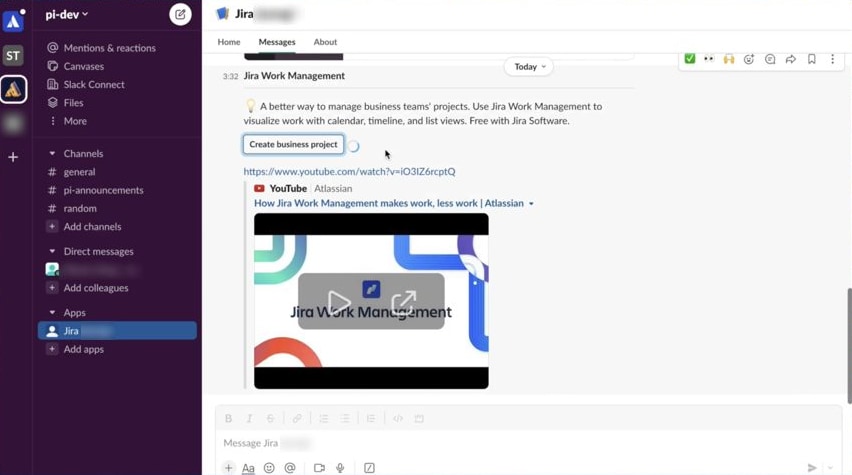
A prompt in the Slack app's welcome message

The Jira app's welcome message in Slack

It fired at install time, before anyone had a task in mind, competed with the rest of the setup, and asked people to leave Slack and switch products to act.

Not effective

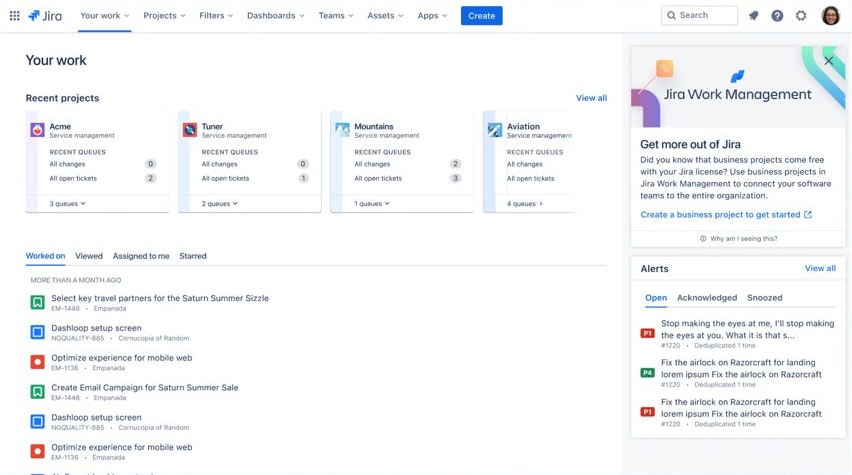
An awareness card on a personal work page

An awareness card about business projects on the Your work page

That page is for getting back to your own work, so a generic card read as an advert. Another team later succeeded with a related approach, which suggests the page wasn't the problem. Targeting and timing were.

Shared dates

Business teams plan around software dates, so I put the dates where they plan

Experiments brought business teams into Jira. Keeping them there meant giving them a reason to work next to their software teams, not just near them. A marketing team planning a launch needs to know when the release ships, and the answer lived in another team's project. People chased it in Slack and copied dates between tools, where they went stale.

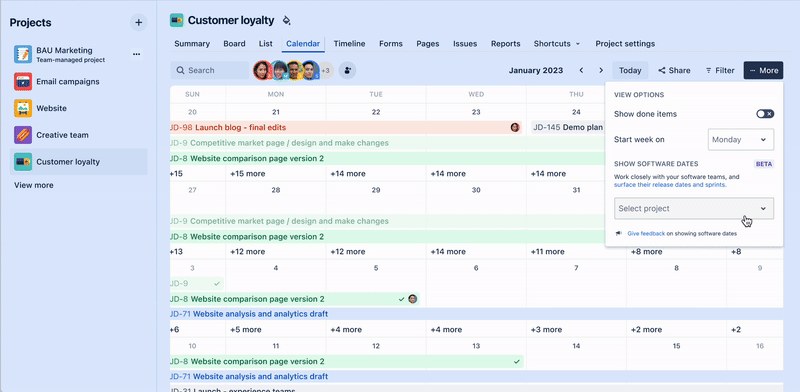
So alongside the experiments, I led a feature that let a business project follow its software teams' release dates, right in its own calendar. A project admin picks the software project once, and the whole team sees the dates.

A business project's calendar with a Show software dates setting, choosing a software project to follow
Shipped: software release dates in the business calendar, set once by an admin.
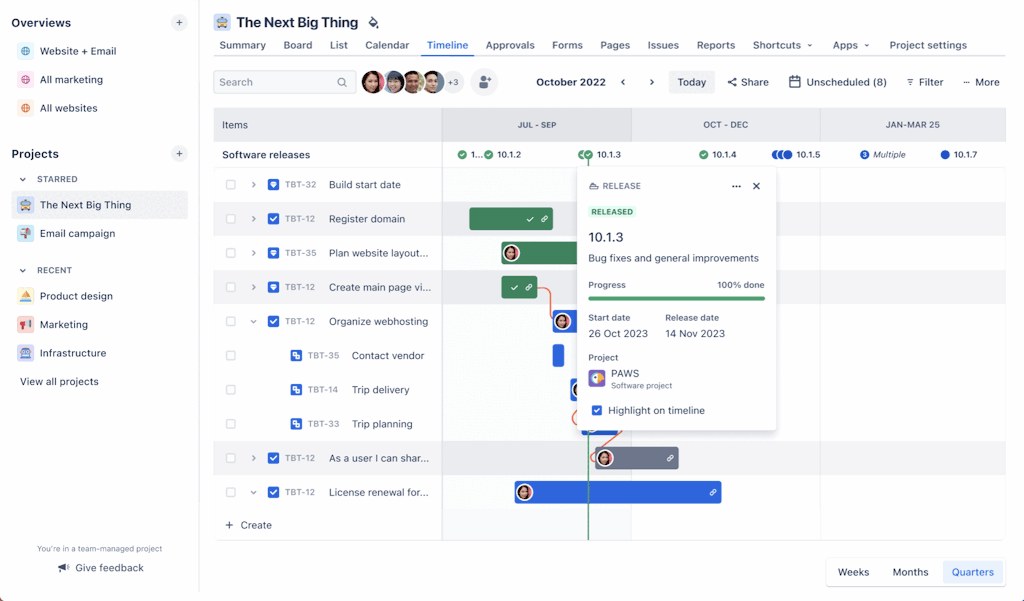
A business project's timeline with a row of software releases and a release's details open
Designed next: the same releases on the business timeline.
25% → 30%Weekly business-project users on the calendarAfter software dates arrived
68% vs 55%Calendar use among existing calendar usersWith software dates, against without

Two decisions I had to defend

One setting, every view. Should the software projects a team follows be set per view, or once for the project? In interviews, people expected one choice to apply everywhere. One put it simply: they couldn't think of a reason to want their timeline and calendar to differ. So changing it in one view changes it in all of them.

Where the feature stops. The most requested change was following several software projects at once. That is also where Jira's separate planning tool, Advanced Roadmaps, begins. We weren't trying to build the whole puzzle, just a few opinionated pieces that give teams cross-team visibility from where they already work. So following more than one project became part of Premium, with a limit of five. Past that, the right answer is the planning tool. And a limit is easy to raise later and hard to lower once people depend on it.

Measurement

Two metrics, and a gate every experiment had to pass

Primary: creation

The share of sites in the test group that created at least one business project, sample projects included, against a control group. It was the leading metric, and the gap between the groups is what forecast paid-user growth in the long run.

Secondary: still in use

Of sites that created a business project on day one, the share still active in it on days 1 to 6, with any activity counting. Paired with creation in every experiment, so more projects had to mean more use, not just more clicks.

The gate

An experiment that failed to deliver a statistically significant increase in business project creation was rolled back. We also aligned with experience owners to roll back any experiment that caused a statistically significant regression in guardrail metrics, even if it improved the primary metric.

Revenue

Historical data linked business project adoption to paid-user growth (revenue per paid user), segmented by customer type, tenant growth rate (fast-growing, stable, declining) and maturity (new vs. existing). This enabled project creation to forecast revenue using blended adoption trends.

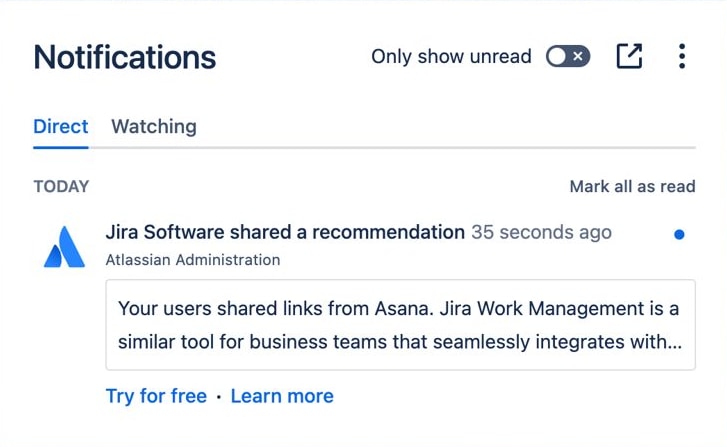
We ran most of the post-analysis ourselves. A data scientist supported the revenue forecasting and the model targeting. The analysis template we built was later adopted by other Jira teams. I wrote up what I learned in 3 lessons from running experiments as a product manager.

Reflection

Behaviour changes at moments, not on surfaces

The pattern across thirteen experiments is simple to say and hard to apply. The same recommendation worked or failed depending on when it appeared. Shown while someone was choosing or creating a project, it moved the numbers. Shown at a cold moment, such as an install, a notification or a personal to-do page, it didn't.

The other lesson is about honesty with your own results. The biggest number we had was also the easiest to inflate, and checking it ourselves is what made it believable to leadership.

What I'd do differently: agree the guardrails with every surface-owning team at the start. We negotiated many of them as each experiment came up. Shared rules set upfront would have let everyone move faster with less back and forth. On a shared platform, growth only lasts if you're explicit about where risk is allowed and where it isn't.